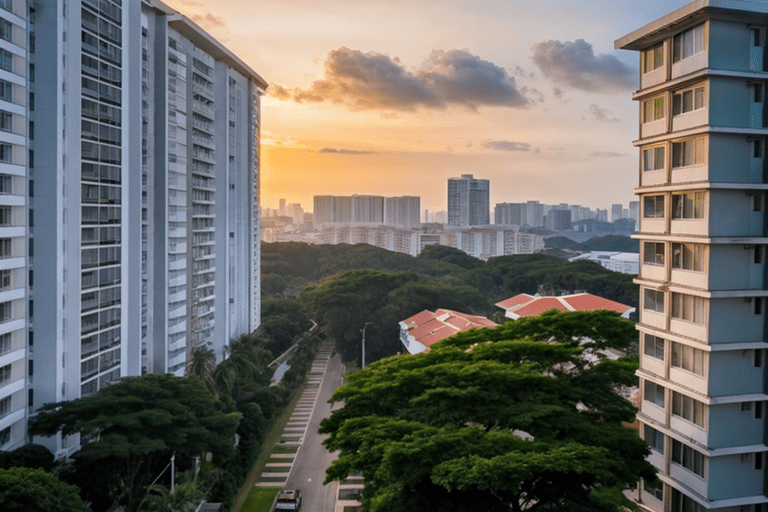
Real Estate is widely regarded as one of the best and most profitable ways of investing in the future of Singapore.
Whether you are new to property investment or a veteran investor, it is essential to grasp the characteristics of the Singapore property market.
This guide will give you tips and approaches to finding the right property investment opportunity in Singapore.
Investment properties can be categorized as follows:
Residential, commercial, and industrial properties are among the investment opportunities available in Singapore. Each type of property has its unique advantages and considerations:
Residential Properties
Condominiums: Most suitable for investors interested in luxury housing and facilities. Property in strategic areas is usually characterized by high appreciation and good rental returns because of high demand from expatriates and professionals.
Landed Houses: It is perfect for people who need more space and seclusion. Such property types are generally considered to have higher capital gains in terms of return on investment particularly in Singapore where land is scarce.
HDB Flats: Reasonably priced plans that can be subsidized by the Singapore government. Although they have limitations when it comes to purchase and lease, they can offer steady revenue from leasing and capital gains in the long run.
Commercial Properties
Office Spaces: Appealing to business and investors in the corporate world. These properties can provide high rental returns and long-term occupancy from lease agreements with companies.
Retail Outlets: It is useful for retail businesses as well as investors interested in consumer markets. Some of the best retail shops in malls and prime business areas can attract high rental rates.
Shophouses: A combination of business and living areas, it provides great potential. These are in high demand due to their historical significance and the designs used in construction.
Industrial Properties
Warehouses: Beneficial to companies that operate in the logistics and distribution industry. These properties are popular especially due to e-commerce and do not need as much attention as other property types.
Factories: Specializing in serving manufacturing and production companies. It can generate constant rental revenue and is commonly situated in dedicated industrial areas.
Business Parks: Most suitable for tech and research-orientated businesses. These properties provide an optimum environment for innovation and can be able to attract premium tenants.
Factors Influencing Property Investment
Several factors influence property investment in Singapore:
Market Trends
Be aware of property market characteristics, specifically supply and demand, rental returns, and capital growth rates. Market cycles are important to understand since they make it possible for investors to time their investments appropriately.
Economic Conditions
Follow the gross domestic product, employment statistics, and interest rates because they affect property values and investors’ attitudes. An improved economy is usually associated with increased property consumption and prices.
Government Policies
Keep abreast of the government policies and measures on property investment and taxation including the ABSD and SSD. These policies have the potential to have huge impacts on your investment returns.
Location Analysis
Assess the property’s location by analyzing how easily it can be accessed, whether there are essential services nearby, and how close it is to transport systems, schools, hospitals, and other features or plans for the area’s growth. The best locations tend to produce higher rates of capital growth and rental income.
How To Start Property Investment In Singapore
The term ‘investment property’ means owning or buying a property without the intention of living in or using it.
Instead, you see it as a way to receive a return on investment. Property investment can range from residential, and commercial, to industrial properties.
Real estate investment remains one of the most preferred investment channels for many Singaporeans.
This is because you can invest long-term without worrying about short-term fluctuations (in terms of value).
When it comes to property investment, these four regulations will impact your ability to finance your transactions:
- Seller’s Stamp Duty (SSD) – Payable if you sell a residential property within 3 years of buying.
- Additional Buyer Stamp Duty (ABSD) – Payable if you wish to buy another residential property while owning another in Singapore.
- Total Debt to Servicing Ratio (TDSR) – Financial framework that limits your monthly debt repayment to a portion of your gross salary/income.
- Loan to Value (LTV) – Financial framework that determines how much housing loan you can borrow. It decreases with the number of active mortgages.
With the new implementations of the cooling measures, ABSD and SSD have made property investment in Singapore more costly than ever.
Meanwhile, the TDSR and LTV ratio is constructed to restrict Singaporeans from taking on too much loan or debt. Ensuring that debt owners retain the ability to pay off their financial obligations.
Housing loans are also included under these two frameworks.
These various regulations will therefore impact the ability of homeowners to property investment in Singapore.
For example, Singaporean citizens who are investing in a second property are to pay an ABSD of 20% and an ABSD of 30% for their third and subsequent property. This will accumulate and add to more costs.
Besides, the sum of an individual’s loan repayments (housing loans, credit card debts, etc) which is under the TDSR framework cannot exceed 60% of their income.
If you want to upgrade from an HDB, you need to know that there is also a remission period of 6 months for ABSD.
This means that if you were to sell your first property within 6 months, you can get a ‘refund’ or compensation for the ABSD that you have incurred.
How To Profit From Property Investment In Singapore
When it comes to property investment strategies, investors can consider various approaches based on their goals and risk tolerance:
There are generally three ways to make money from property investment in Singapore.
Two of these ways are active as it requires you to be hands-on, and require high capital. The last method for investment property is comparatively more hands-off and passive which is also more affordable.
Now, let’s take a look at the three ways:
1. Buy and Sell (‘Flipping’) Properties

This property investment method is what most easily comes to mind when we hear the term investment property.
Buying and selling or “flipping” properties is one of the most well-known ways to profit from property investment.
This method allows you to buy a property, do some A&A, and sell it at a higher price for a profit. The defining feature of this method is speed.
You’ll want to sell your property as soon as possible to limit the risk to your capital.
This method however relies on capital appreciation, which is something that you may not always be able to control.
Invest in property and hold it for a short time to sell at a higher price than what was bought for, through buying a property that is lower in value and requires some improvements.
This method demands a lot of attention to value and renovation.
There are also other drawbacks to consider, like:
- Making costly improvements on the property and pricing yourself out of the market
- Paying for costly repairs if you face any unexpected problems
- Lack of demand
- Seller stamp duties are applicable for residential and industrial properties within the holding period
2. Buying and Renting Out Properties
This property investment method allows you to take on the role of a landlord.
The investment strategy here is holding onto the property long-term and renting it out for income.
Your rental income needs to be higher than your mortgage payments for it to turn into a profit. This also includes the costs of renovations or repairs.
Once the property is all paid up, any rental income you collect will be pure profit.
This however depends on how long it takes you to pay up your mortgage. The rent amount is also a variable.
But there are also cons when choosing this method for property investment.
You may not be able to find suitable tenants as some may not fit your specifications, criteria, etc.
Your margins may be razor-thin and you need to be responsible for the replacements and repairs of the property.
Acquire properties for capital growth and rental income, and enjoy both capital appreciation and rental income.
This strategy is all about the long haul and it is something that takes time and effort.
3. Invest in REITs
This property investment method allows you to partake in real estate investment without having to deal with all the hassle first-hand.
REITs are short for Real Estate Investment Trusts. It works like any other unit trust or mutual fund.
This way, your money is pooled together with other investors and used for property investment in Singapore.
Different REITs deal with a range of properties, such as hospitality, office, retail, residential, or a combination of any.
You are to pay a fee for the REIT to be managed professionally.
If you are looking for a more hassle-free investment experience, some Robo-advisors such as SYFE also provide REITs-based portfolios.
But of course, these investment property methods have their risks as you would expect from the stock market.
When the market is bullish, you will earn but when it cools, you might see a loss.
Properties To Invest In – What And Where
A helpful guide to start looking for once you are ready for property investment would be to study the URA’s Master Plan.
The Master Plan gives you an idea of upcoming developments and sites over the next 10-15 years in different parts of Singapore.
From there, you’ll need to consider your finances and budgets and play around with the best type of properties that you can afford.
It has been shown that Singaporeans usually plan around BTOs area, ECs, and resale HDB when they consider investment property.
These properties tend to be more affordable as compared with other properties.
What Affects Singapore Property Prices?
The goal of any investor is to get back more money than you originally spent on real estate investment.
In this context of property investment, it means buying when prices are low and reasonable, and selling when they’re higher.
Here are 6 factors that affect property prices in Singapore.
1. Location And Infrastructure
Location is a big factor because if the property has nearby amenities such as shopping malls, schools, MRT stations, bus stops, hawker centers, etc, it can push up property prices.
Improved transport infrastructure can also have a huge effect on property prices especially when it comes to new MRT stations and a bonus if it’s within walking distance.
2. State And Condition Of The Property
The state and condition of the property can affect the purchase price especially when it’s old. An example would be landed properties.
They require a lot of maintenance, and if you happen to come across any issues that need to be repaired, they can be very costly to fix, which then lowers the selling price.
Conversely, if you recently renovated your property, it can warrant a rise in your asking price.
3. Lease
Most of the properties in Singapore are Leasehold with it being at 99 years.
You are to expect a drop in the value of the property as the remaining lease gets shorter in duration.
Freehold properties will retain their value much better over time, but it can be a lot more costly to purchase firsthand or upfront.
4. Interest Rates
Interest rates in Singapore are very low at the moment but they can bounce back anytime.
Lower interest rates mean that it costs less to take out a loan when you buy a property.
In general, higher interest rates tend to be a drawback and discourage or scare people from buying property. This will hurt the prices.
5. Government Policies
The government has the right to step in at any time with policies designed to have an impact on property prices.
For example, they came up with the cooling measures, ABSD and SSD in 2009 as we have discussed earlier.
This has suppressed prices considerably.
6. Economic Climate
You can expect demand for and prices of property to fall as people tighten their belts in a recession.
Risk Management When It Comes To Property Investment
While property investment offers lucrative opportunities, it’s essential to manage risks effectively:
Financial Planning
Establish attainable targets, funding, and cash flow to avoid draining the resources and fueling financial instability. Financial management is an essential aspect of property investment to ensure that investment projects are well-developed to yield good returns.
Due Diligence
To counteract such risks, investors should always do their homework, visit the property, and seek legal advice before investing. Confirm the property title and the existence of any encumbrances on the property and the market conditions in the area.
Portfolio Monitoring
Continuously evaluate your property portfolio and make changes when necessary to ensure it is performing to the best of its potential while minimizing risks. Be aware of what is going on in the market and modify your approach as necessary.
Professional Guidance
Consult with other individuals in the real estate industry, financial consultants, as well as attorneys regarding complicated investments and legal frameworks. The advice of a professional is important in ensuring that one does not make some expensive blunders.
Financing Options and Considerations For Property Investment
Financing is another important factor in property investment because it defines your investment potential and your ability to fund the investment. Consider the following financing options and considerations:
Mortgage Loans
Examine different types of mortgages available in banks and other financial institutions including the interest rates, loan term, down payment, and loan-to-value ratio. Don’t rush into getting a loan at the first bank you encounter, compare the loan offers from different banks.
Government Schemes
Make use of government-initiated programs like the Central Provident Fund (CPF) for Singaporeans and Permanent Residents where it can be utilized for the purchase of property, for down payment, and for paying off the mortgage. These schemes can cut down your financing costs to a large extent.
Investment Holding Period
Ensure that the duration you intend to hold your investment is well thought out to enable you to achieve your strategic financing goals and reduce risks while maximizing your returns from rental income, capital appreciation as well as resale prospects. More time on your hands enables you to withstand shocks in the market and wait for the right time to make your move.
Financial Discipline
Safeguard your financial stability by controlling the level of indebtedness, tracking cash flows, and having adequate reserves for contingencies, empty spaces, or market fluctuations. Do not over-leverage.
Tax Implications For Property Investment
Property investment in Singapore is subject to various tax implications that investors should be aware of:
Property Tax
The property owners are required to pay property tax every year depending on the annual value which is determined by the government. Paying for the services on time to avoid any charges being levied on them.
Income Tax
The income earned from investment properties is considered as income and should be reported on your tax returns, but expenses incurred in managing and maintaining the property are allowable. It is important to keep a proper record of all expenses.
Capital Gains Tax
Singapore does not levy capital gains tax on the sale of properties but it has Seller’s Stamp Duty (SSD) which may be charged to the seller if he sells within a certain period. It is important to make sure you have an understanding of the rates of the SSD and how you can fit them into your sales strategy.
Additional Buyer’s Stamp Duty (ABSD)
ABSD is imposed on the subsequent purchase of residential properties for use by specific categories of buyers, including foreign entities or individuals, Singapore citizens, and permanent residents who purchase their second or subsequent residential property. Remember to include ABSD when making your purchase cost computations.
Legal and Regulatory Compliance For Property Investment
Ensure compliance with legal and regulatory requirements when investing in property:
Contractual Agreements
Consult professional lawyers to vet and prepare legal documents such as sales and purchase contracts, tenancy agreements, and property management contracts. Contracts are legal documents that help to regulate the relations between the contracting parties.
Zoning and Planning Regulations
Zoning laws and ordinances, the limitations on the use of land or buildings, and planning that may apply to the development or use of properties. It is important to note that failure to adhere to the guidelines may result in fines or legal problems.
Strata Title Management
For strata-titled properties like condominiums, adhere to management corporation by-laws, sinking fund contribution as well as the common area maintenance requirements. It is also important that you be an active participant in management meetings so that you are well-informed.
Tenant Rights and Obligations
You should get to know some of the laws rights and responsibilities of landlords and tenants for tenancy, tenancy agreements, tenancy disputes, and property management. This is because satisfied tenants are likely to reside in the house for long and also ensure that the property is well maintained.
Market Trends and Analysis
Stay abreast of market trends and conduct a thorough analysis to make informed investment decisions:
Market Research
Carry out a feasibility study on current market conditions to determine the demand and supply of the various segments of properties, rental returns, vacancies, and pricing structure.
Some tips include using reliable sources of information and always being up-to-date with the latest market reports.
Economic Indicators
Consider factors like growth rate, employment, inflation, and interest rate which affect the property market, investment, and the ability of buyers to purchase homes. Property market stability is synonymous with economic stability.
Emerging Opportunities
Look for new investment avenues, prospective new projects, infrastructure projects, and growth sectors that may be likely to bring about capital value and rental income. The case of investing in developing regions can be very profitable if early initiated.
Risk Assessment
The following risks should be assessed and risk management measures and contingency plans should be formulated for investment risks such as market fluctuations, changes in regulatory requirements, economic risks, and geopolitical risks.
Risk is another factor where diversification and a healthy balance sheet can be used to mitigate these risks.
More Tips On Property Investment
Here are some tips when looking into property investment in Singapore:
- Look for convenience
Think of schools, park connectors, food centers, bus stops, and MRT stations.
- Look out for rising vacancy rates
This may be more difficult to find tenants for your property.
- Beware of signs of gentrification
Expensive trendy cafes and art galleries in an old neighborhood can declare well-heeled tenants paying high rents.
- Keep an eye out for planned major developments
New MRT stations, hubs, and shopping malls can re-energize a quiet neighborhood and this will drive up the prices.
- Go to property auctions
Distressed properties are often auctioned off. You could snag a valuable property at a reasonable price for instant capital gains.
To Sum It Up
We have covered the crucial information that you need to know if you’re planning to dabble in property investment in Singapore.
Real estate investment is a step up so make sure to have your finances planned and ready.
We hope our guide has helped you through this process.
Keen to start your property investment journey in Singapore? Get in touch with us to get started!
Unlock The Secrets To Smart Home Buying In Singapore
A 6-page report tailored for Singapore home buyers. Learn about the unique challenges locals face, and discover key steps to making well-informed property decisions.