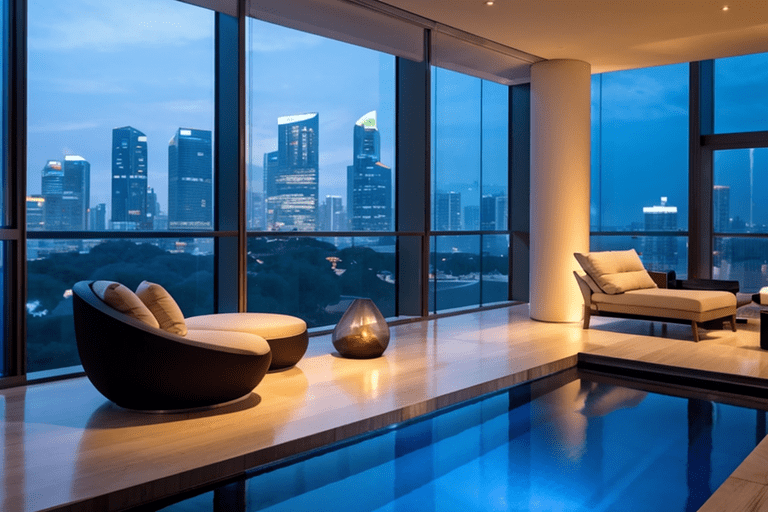
In the middle of 2024, the spotlight on the Singapore property market remains a focal point for investors, homebuyers, and market professionals.
The Property market Singapore 2024 has proven to be highly competitive despite the global economic uncertainties and the challenges posed by the COVID-19 pandemic.
In this extensive article on the Property market Singapore 2024, we will discuss the latest trends, insights, and opportunities in Singapore’s real estate with an emphasis on the landed home space and the price dynamics across different districts.
Overview of Residential Property Market Singapore 2024
The residential property market Singapore 2024 encompasses a wide spectrum of private and public homes to meet the expectations of the demographic increase in the wealthy population.
Condominiums, apartments, and landed properties, in the private residential market have been at the fore of the property market growth and performance.
According to data from the Urban Redevelopment Authority (URA), as of Q4 2023, the private residential property price index has increased by 6.5% year-on-year, following a 10.6% growth in 2022 and an 8.1% growth in 2021.
This robust price appreciation reflects the market’s underlying strength, supported by Singapore’s stable political environment, sound economic fundamentals, and attractive living standards.
The public housing market, managed by the Housing and Development Board (HDB), has also remained stable and affordable, with the government implementing various measures to ensure that housing remains accessible to all Singaporeans.
The HDB resale price index has grown by a modest 2.3% year-on-year in Q4 2023, reflecting the balanced approach taken by the government to maintain price stability and affordability.
Property Market Singapore 2024

Landed Property Outlook: A Bright Spot in the Market
Of all the segments of Singapore’s housing market, the landed property market Singapore 2024 has proven to be one of the most appealing, especially for high-net-worth individuals and investors.
Analyzing the different types of properties, specifically the landed ones such as detached, semi-detached, terrace houses, and bungalows, the living experience is prestigious and spacious in addition to land ownership.
According to URA data, the price index for landed properties has increased by 8.2% year-on-year in Q4 2023, outpacing the growth of the private residential market. This strong performance can be attributed to several key factors:
1. Limited Supply and Scarcity Value
Landed properties are considered one of the limited and most desirable forms of real estate investment in land-restricted Singapore.
The government land sales aim to focus on land sales for high-rise premises to understand the optimum usage of the land accordingly; the new landed properties are thus scarce and the demand for having landed homes continues to rise and pushes up the prices.
2. Strong Demand from Affluent Buyers
The landed property market has been boosted by the increasing wealth and desire of Singapore’s elite, HNWI, family offices, and professionals.
These buyers are drawn to the prestige, privacy, and exclusivity of landed homes, and are willing to pay more for the privilege of land ownership.
3. Favorable Financing and Wealth Creation
The low-interest rate environment and the availability of attractive mortgage financing have made it more affordable for buyers to purchase landed properties.
Landed homes are also considered by many buyers a worthy investment tool for building and preserving wealth due to their good capital appreciation outlook in the Singapore property market which is relatively stable.
4. Changing Lifestyle Preferences
Due to the COVID-19 public health crisis, there have been changes to the preferences of buyers that show that they are more interested in acquiring more space and more architectural homes that fit large families and their activities in terms of home office, schooling, and recreational activities.
Landed properties, with their spacious layouts, private gardens, and exclusive amenities, have become increasingly attractive to buyers looking for a more comfortable and flexible living environment.
The continued stability of the landed property market Singapore 2024 prevails because of the scarcity of new listings, demand fundamentals, and Singapore’s locale advantage as a global hub for business, but this does not mean buyers and investors should have nothing to worry about.
They should look out for risks, which include the slow global economy, inflation risks, and the ability of the government to keep a close check on the property market, particularly on the growth rate.
Property Market Singapore 2024

Singapore Property Prices by District: A Localized Perspective
While the property market Singapore 2024 has shown growth, the price dynamics and trends vary significantly across different districts and localities.
Understanding these localized differences is crucial for buyers, investors, and developers looking to make informed decisions and capitalize on the opportunities in the market.
According to URA data, the following districts have shown notable price trends and characteristics in 2023:
Core Central Region (CCR)
This CCR, which comprises districts 9, 10, 11, the Downtown Core, and Sentosa, has continued to stay as the most expensive and sought-after part of the market.
The residential properties and new launch Condominiums in CCR Q4 2023 have seen the mean price per square feet (psf) increase by 5% to S$2,945psf. 8% year-on-year.
Due to the high demand from HNWIs, foreign buyers, and investors looking for trophy assets and wealth preservation, the CCR market has been attractive.
This has also helped enhance the price increase, especially for new launches, and land is also considered a scarce resource for condominium developers, especially the luxurious ones and bungalows.
Rest of Central Region (RCR)
Districts 1 to 8 and 12 to 14, called the RCR, emerged as a sweet spot for buyers and investors, offering a balance of accessibility, amenities, and affordability.
Based on the obtained data, the average price of private residential properties in the RCR posted Q4 2023 has cost S$2,235 psf with a 7% increase. 2% year-on-year.
The RCR market has been transformed with the decentralization of economic activities and administrative regions such as Jurong Lake District and Paya Lebar Central.
The regeneration of mature estates such as Queenstown and Tiong Bahru, as well as the completion of a new transportation line indicated by the Thomson-East Coast Line, has also enhanced the appeal and development possibility of the RCR.
Outside Central Region (OCR)
The districts 15 to 28 collectively referred to as the OCR have continued to be the most competitive flexible mass market segment where first-time home buyers, upgraders, and investors are found.
The price trend of private residential properties in the OCR at the end of Q4 2023 has society an average price of S$1,695 psf and the price has exponentiated by at least 6%. 3% year-on-year.
The OCR market has been granted a new life by the government’s endeavors to establish new growth locations in Punggol Digital District and Jurong Innovation District and improve the overall liveability and accessibility of the suburban townships.
This strong demand and interest in large-scale master planned condominiums and integrated developments like Pasir Ris 8 and SG Residential have also helped sustain the price rise and transaction volume in the OCR.
In addition to these broad regional trends, there are also notable variations and opportunities at the district and neighborhood levels.
For example, districts 15 and 16, which include the East Coast and Bedok areas, have shown strong price appreciation and demand, driven by the limited supply of new launches and the growing popularity of seafront living.
Similarly, districts 19 and 20, which include the Serangoon and Ang Mo Kio areas, have benefited from the rejuvenation of mature estates and the potential of the Cross Island Line.
Case Study: Property Market Singapore 2024
To illustrate the opportunities and challenges in the property market Singapore 2024, let’s consider a case study:
The Tans: Investing in a Prime Condominium
The couple, Mr Tan and Mrs Tan, both early thirty’s working professionals, had been residing in a 2 bedroom condominium in District 9 for three years. They acquired a prime condominium in 2024 since their income, and savings plans, had improved.
Based on research and consultation with a reliable property agent, the Tans set their eyes on a 1,200 sqft, 2-bedroom in a new launch project in District 10 in line with Stevens MRT station. The unit was S$2.8 million, giving them a comfortable and well-planned space for living with a 50-meter swimming pool in the sky, a rooftop garden, and even a personal concierge.
For the down payment and stamp duties, estimated to be S$560,000, the Tans employed their savings and CPF monies. They also took up a bank loan of S$1.68 million, with an LTV ratio of 60% and a term of 30 years.
Ever since the Tans bought the apartment in Q2 2024, they have been experiencing the convenience and prestige of living in a strategic location with proximity to Orchard Road, the CBD, and several lifestyle nodes. They also have positive sentiments on its investment prospects, principally because the new units in the area are scarce and appeal to resident and overseas investors.
Conclusion
The property market Singapore 2024 has demonstrated remarkable resilience and growth potential despite the global economic uncertainties and the challenges posed by the COVID-19 pandemic.
The housing market, especially residential properties has been boosted by the strong political stability, economic foundation, and living conditions in addition to increased affluence and desire of the citizens.
Continuing the outlook to the year 2024 and beyond, the scene of the property market Singapore 2024 appears upbeat and likely to be induced by both the current economic recovery processes and the government’s continued political commitment to ensuring that the property market remains healthy and sustainable in the years ahead, maintaining the enduring appeal of Singapore as a global hub for business, investment, and talent.
The landed property segment is expected to continue outperforming the overall market, driven by the limited supply, strong demand from affluent buyers, and the growing preference for spacious and flexible living environments.
At the same time, the price dynamics and opportunities in districts and localities will remain intangible and subject to changes under the influence of the government’s land-use policies, infrastructure development, and shifting trends in people’s lifestyles.
Those buyers, investors, and developers who can cope with these region-specific factors and trends will stand to gain the most in the Singapore property market in the years to come.