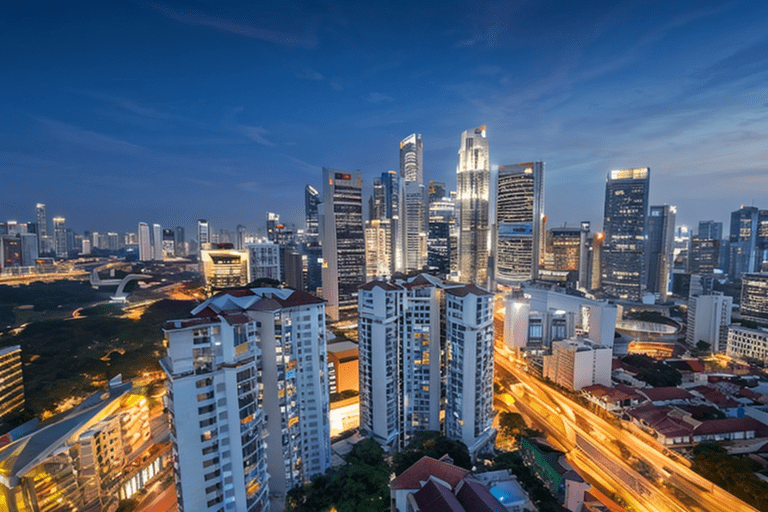
The private property market in Singapore has been used historically to benchmark the country’s economy and is one of the vital elements of its growth.
Being a nation with a robust infrastructure and a pro-business environment, Singapore has been attracting local and foreign investors to obtain competitive and stable returns in the real estate market.
This article on Singapore private property prices aims to assess Singapore’s existing private property market, understand the recent trends and indices involved, and finally give a projection of its growth for 2024 and beyond.
Overview of Singapore’s Private Property Market
The Singapore private property market includes residential, commercial, and industrial properties catering to different buyers and investors, each differing in expertise.
Condominiums, apartments, and other landed properties are classified under residential properties, which remain the largest and most active sector with the highest owner and investor demand.
Based on figures obtained from the Urban Redevelopment Authority (URA), it was estimated that there were around 365,000 private residential units in Singapore as of Q4 2023, with a total value of Singapore private property prices at S$1.2 trillion.
The market is strongly regulated, with the government managing the market by monitoring and stabilizing prices through various policy measures, such as the Additional Buyer’s Stamp Duty (ABSD) and the Total Debt Servicing Ratio (TDSR).
Singapore private property prices #1

Recent Price Trends and Key Drivers
Singapore private property prices have steadily risen and continue to do so in recent years in Singapore despite the unstable global economy and the effect of COVID-19.
URA has accepted this in the recently released Private Residential Property Price Index (PPPI), revealing 8.1% growth in 2021, 10.6% in 2022, and 6.5% in 2023, reaching a new peak in Q4 2023 for Singapore private property prices.
Several factors have contributed to this robust price growth in Singapore private property prices:
Strong Economic Fundamentals
The Singapore economy has continuously recovered and has proved adaptive, with an expected GDP of 3.5% and a stable future for the next year, 2024.
The favorable economic conditions, including the strategic location of the city-state, skilled workforce, and business-friendly environment fostered by the government, have led to foreign investment and talent, boosting the demand for private properties.
Low Interest Rates and Ample Liquidity
The low-interest rate environment, supported by accommodative monetary policies globally and locally, has made mortgage financing more affordable and accessible for property buyers.
The amount of money in the market through savings rate and getting access to foreign capital has also driven the demand for private properties mainly for investment purposes and to hedge against inflation.
Limited Supply and Land Scarcity
Due to the small area and the government’s well-orchestrated, sensible land sales program, the availability of new private residences in Singapore has been kept in check, which has driven price appreciation in the face of healthy demand. The scarcity of land has also driven up the value of existing properties, particularly in prime locations and mature estates.
Evolving Lifestyle Preferences and Aspirations
The COVID-19 crisis has upped certain wants and desires, causing people to have shifted their mindsets about acquiring properties; the new requirements include more space and better layouts that would enable such functions as remote work and varying living conditions.
Other factors include the increasing purchasing power in the island city-state and the enrichment in the class of Singapore’s population, leading to a need for luxury enclaves equipped with exotic facilities.
Resilient Demand from Local and Foreign Buyers
Despite the economic uncertainties and travel restrictions, demand for Singapore’s private properties has remained resilient, driven by local and foreign buyers.
First-time home buyers and upgraders have remained active in the marketplace due to the sound economy and relatively low interest rates.
International purchasers have also shown a keen interest in properties in the Singapore real estate market, mainly China, Indonesia, and Malaysia, due to the stability and investment opportunities in Singapore, such as quality living standards and environment.
Singapore private property prices #2

Outlook for Singapore Private Property Prices in 2024
From 2024, the future of Singapore private property prices is anticipated to stay positive though it may not be as strong as the earlier years. Several key factors are likely to shape the market’s trajectory:
Economic Recovery and Growth
As the global economy struggles to contain the effects of COVID-19 and the vaccination exercise intensifies in Singapore, the country’s economy is projected to grow at 3. 0% to 5.0%, as per MTI’s forecasts for 2024.
This continuous and steady flow of the economy has been enforced by the government’s plan to transform Singapore into an innovation and technology city, as well as promote sustainability in the real estate market, especially in the residential and commercial categories.
Gradual Normalization of Interest Rates
Interest rates have been projected to remain at dormant levels in the short term. Due to central banks’ gradual return to monetary policies’ standardization globally and locally, a moderate rise in mortgage interest rates in 2024 is expected.
This may cause growth in the property market while encouraging those intending to purchase properties to conduct their business more cautiously.
Increases in interest rates should be partially offset by the stable economic background and the attractive costs of borrowed money compared to the historical levels.
Calibrated Government Policies
As for the Singapore private property market, the authorities are expected to approach this sphere quite prudently and restrained due to the need to support the growth of the housing market as well as to minimize the risks of overheating the market and sharp fluctuations in housing prices.
While it does not seem that the government will take any cooling measures yet, it may fine-tune existing policies or introduce specific measures to address segments or localities, if necessary.
Continued Demand for Quality and Sustainability
As Singapore transitions to a more sustainable and livable future, demand for private properties that embody quality, innovation, and sustainability will only grow.
Purchasers and investors are focusing more on assets with green elements, smart technologies, and wellness components that reflect the government’s ambition of the ‘City in Nature’ and ESG trends worldwide.
Managers, as well as developers, are in a better position to gravitate toward clients’ preference changes and secure better pricing and demand if they choose to consider these factors in their projects.
Potential Headwinds and Risks
Singapore’s private property market outlook is rather optimistic, however, some factors and threats might slow down the price growth and affect the market position soon.
These include the risks posed by the COVID-19 pandemic and the resulting economic inequality worldwide; the unsettled geopolitical risks as well as trade tensions with Singapore and its open economy; and the possible availability-supply imbalance in specific niches such as excessive condominiums for the affluent or reduced demand for office spaces after the pandemic.
Based on these factors and barring any major external shocks or policy changes, Singapore’s private property prices are projected to grow by 3.0% to 5.0% in 2024, according to consensus estimates from property consultants and analysts.
This moderate pace of growth reflects the market’s resilience and the balanced approach taken by the government and the market.
Case Studies – Singapore Private Property Prices
To illustrate the trends and opportunities in Singapore private property prices, let’s look at this case study:
The Tans’ Investment in Commercial Property
Mr and Mrs Tan, a middle-aged couple with two college children had been actively investing in the private residential property market of Singapore for about two decades. Having three condominiums and one landed property, the Tans thought it was time to diversify in 2023 so they looked for commercial properties.
Having consulted with their property agent, the Tans found an efficient office unit at the Guoco Midtown in the Beach Road-Bugis region which is a mixed-use development. The unit which is sized 1,500 sqft is for S$3. 5 million and provides a Grade A office with 4-metre ceiling height, column-free, and a spectacular view of the city.
To finance the acquisition they relied on their savings and rent from their residential houses and a bank loan of S$1.75 million with an LTV ratio of 50% and a tenure of 15 years. They also hired a property management company to manage the renting and maintenance of the unit; the intended yields for this particular unit were about 3.5% net rental yield per annum.
Since the transaction was effected at the end of 2023, the Tans have managed to find a multinational company that has agreed to take the unit on a lease basis for three years at a 3% annual increment. They are confident in the long-term growth potential of the unit, given its prime location, high specifications, and the government’s plans to rejuvenate the Beach Road-Bugis district as a vibrant commercial and cultural hub.
Conclusion
The private property market has proved that it is very viable and capable of expanding in Singapore due to the strong economy, the sound policies of the government, and the regulatory framework.
Singapore private property prices forecast for 2024 and beyond shows that price is set to rise but at a sustainable pace, much to the effects of economic recovery, gradual increase in interest rates, and demand for quality and sustainable buildings.
Despite these merits, some threats and challenges are worth considering, including the unbalanced global economic revival and tensions in relations between countries. Despite these issues, the market’s fundamentals are still strong, and the government’s policy is balanced and consistently applied.