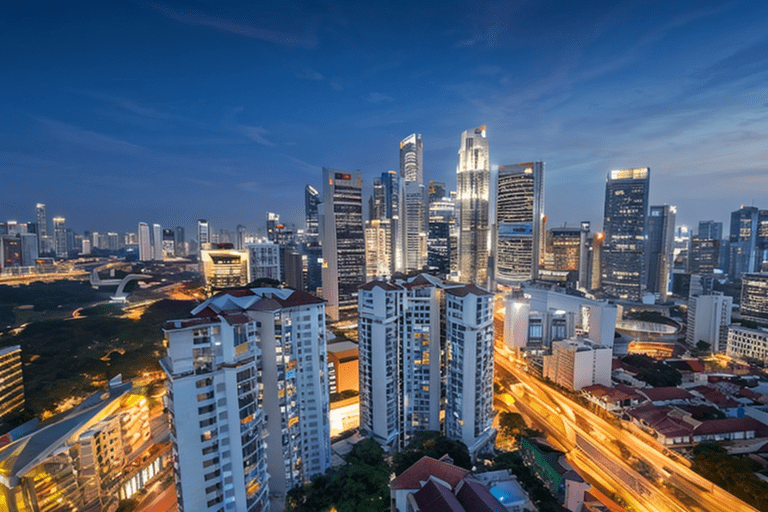
Aside from the usual residential properties that we’re so used to: such as HDB flats, Condominiums, and Landed properties, there are also the lesser-known commercial properties.
When looking for a property solely for investment, commercial property has become increasingly popular in recent years, especially after the introduction of the Additional Buyer’s Stamp Duty (ABSD).
When ABSD was introduced in 2010; buyers started to turn their attention to commercial properties to avoid the hefty duties when buying a 2nd property.
Especially after the recent increase in December 2021, it has become more restrictive for Singaporeans when purchasing their subsequent residential property.
If you are planning to buy a commercial property for investment, our easy-to-follow guide will equip you with all the knowledge you need when purchasing a commercial property.
What is a Commercial Property
So the first question to answer would be, what defines a commercial property?
Commercial properties are built with the intention for business activities or work, unlike residential properties, you cannot use the premises for residing.
For businesses, it is a place for them to expand their business functions and a space to conduct their day-to-day activities.
For the investment owner, commercial properties are generally used to generate returns. Which can be achieved either through rental revenue or capital gains.
Types of Commercial Property

The commercial property that is available in Singapore is categorized into three types:
Retail – Shopping malls, Fitness gyms, Pet Shops, Restaurants, Bars, Shophouses, HDB shophouses, etc.
Retail units are mainly used for brick-and-mortar businesses, a premise for selling physical products.
Shops that are abundant in shopping malls are all huddled nicely under the retail umbrella.
Industrial and Commercial – Offices, Warehouses, Workshops, Factories, Distribution Centers, Garages, etc.
Industrial and commercial property is usually focused on the manufacturing aspect of businesses and is classified as B1 or B2 based on the businesses that can take place on the premises.
Hotel – Hotels, and hostels.
Focused on the tourism aspect of businesses in Singapore, it can range from reputable hotels such as Resort World Sentosa, Mandarin Orchard, and Grand Hyatt to smaller establishments such as boutique hotels. Hostels for workers are also classified under this category.
Benefits of Buying Commercial Property in Singapore
Like any other property purchase, owning a commercial property comes with its own set of benefits and drawbacks. Let us first look at the 5 advantages of owning a commercial property.
1. No Capital Gains Tax
Generally, the profit gains from the sale of a property in Singapore are not taxable. This is because it is considered a capital gain and the country does not impose a capital gains tax.
The exception to this rule is when a person is deemed to be trading properties for profit. This can be determined based on the following:
- Frequency of transactions (buying and selling of properties)
- Reasons for Acquiring and selling property
- Financial means to hold onto the property
- The Holding period
2. No SSD For Commercial Property Except For Industrial Properties
In most cases, buyers are subject to a Seller’s Stamp Duty (SSD) when buying real estate in Singapore.
SSD is a property tax that a property buyer has to pay when he or she sells the property within the number of years you own the property.
However, you are not subjected to paying any SSD for owning commercial properties except for industrial properties.
According to IRAS, the SSD amount you need to pay depends on the holding period (the number of years that you own the property before you sell it).
| Holding Period | SSD Rate |
|---|---|
| 1 year | 15% |
| 1 to 2 years | 10% |
| 2 to 3 years | 5% |
| More than 3 years | No SSD Payable |
3. You Can Claim The Goods and Services Tax (GST) Paid

More often than not, you have to pay the Goods and Services Tax (GST) of 7% when buying a commercial property.
This is because most sellers are business owners that initially purchase the commercial property under the company’s name instead of their own.
This is similar to the Value Added Tax (TAX) that is used in Europe and the US. Hence, even if you are to buy a commercial property in Singapore, you are required to pay the GST.
However, there is an exception where you can register yourself as a GST-applicable Investment holdings entity.
This is recommended if you are intending to purchase more than one commercial property for investment.
Of course, you need to do your due diligence to check with a trustable accountant on how to do so.
After you have done that, you can claim the GST paid upon purchase of the commercial property.
This means that you are exempted from paying GST when you purchase a commercial property under a GST-registered company.
Before deciding on the purchase, just be sure to check with the Inland Revenue Authority of Singapore (IRAS). This is to make sure that you’ll be able to claim it back later.
4. Lower Price per Psf For Commercial Properties
With the soaring property prices in Singapore, you’ll be shocked to know that Commercial properties have a lower price per Psf.
They are usually cheaper on average as compared to their residential property counterparts.
Besides not paying the ABSD and SSD, banks can also allow buyers to borrow a higher quantum of up to 80% when it comes to the purchase of a commercial property.
On the other hand, banks will not finance more than 75% of the value of a residential property.
The Loan to Value (LTV) limit drops to up to 45% if it is a second residential property loan. This means that buyers need to fork out at least a 55% down payment in cash and CPF.
Due to this, assuming the two properties are at the same price quantum, the commercial property may be more affordable than a residential property.
5. Higher Rental Yields For A Commercial Property
Compared to other countries in the region like Vietnam, the Philippines, and Cambodia, Singapore is known for having relatively low rental yields due to its high purchase price.
The commercial property market performs better than the residential property market when it comes to rental yields.
The commercial property rental yield on average is around 5%, compared to residential property, which has a rental yield rate of 2%-3%.
Of course, the rental yield for each property is different and it is still highly dependent on the tenant pool and location of the property.
With that said, do keep in mind that maintenance costs are also much higher for commercial properties.
This is something you need to consider when calculating your rental profit as the high maintenance fees might even out your gains.
Downsides of Buying a Commercial Property in Singapore
Well, it’s not all rosy when owning a commercial property. Let us look at the 4 drawbacks of purchasing a commercial property in Singapore.
1. Higher Down Payments Upfront For A Commercial Property
Yes, you may be able to avoid paying the ABSD and SSD. However, higher cash outlays are often required when buying a commercial property.
The reason is fairly simple. While you can use your CPF to fund the downpayment and mortgage for a residential property, you can’t do the same for a commercial property.
CPF funds are intended for Singaporeans to purchase a residential unit for their own stay; hence it will not be applicable when buying a commercial property.
The mortgage fees, downpayment, as well as the 7% GST, charged on purchasing a commercial property, must be paid for in cash.
This might pose a problem for some buyers as they do not have the financial capacity for such a large cash outlay right of the purchase.
Due to this large upfront capital payment, many buyers are deterred from buying a commercial property for investment.
2. Shorter Leases Are The Norm For Commercial Properties
If we compare the lease with a residential property, you will often see residential properties have a lease of 99 years, 999 years, or even freehold.
With 99 years being the most common lease term for residential properties.
But with commercial properties, leases tend to be much shorter, around 30 to 60 years.
While freehold commercial properties do exist, they are often in the minority and can come at quite a high cost.
Besides, these freehold units are usually located in more secluded, obscure, or inaccessible commercial areas.
It is almost impossible to find a commercial property with a freehold tenure in the prime areas of Singapore.
3. Higher Property Tax Payable
Commercial properties, like residential properties, are subject to property taxes.
The distinction is that depending on whether you’re an owner-occupier or not, the tax rate for residential properties ranges from 0% to 20%.
Whereas for commercial properties, you pay a fixed rate of 10% of the annual value of the property, which is the expected gross annual rent if it were rented out.
The property tax calculation is based on comparable properties in the area’s market rental value.
That being said, commercial property owners tend to pay higher property taxes as compared to regular residential property owners.
Can Foreigners Buy Commercial Property In Singapore?
Yes, foreigners are eligible.
While there are restrictions for foreigners when it comes to buying residential properties, there are no restrictions for foreigners when it comes to buying commercial properties.
According to the Residential Property Act, foreigners are allowed to buy the following commercial properties:
- Shophouses (for commercial use)
- Industrial and Commercial Properties
- Hotels (Registered under the provisions of the Hotels Act)
In other words, foreigners have the same privileges as locals for commercial property purchases. For locals, there are no income caps or eligibility restrictions.
No ABSD charges for Buying Commercial Properties
When you invest in a property in Singapore, you are required to pay for the Additional Buyer’s Stamp Duty (ABSD).
This is especially true for foreigners who wish to invest in Singapore properties as they have to pay a hefty tax of 30%.
However, Commercial properties do not require the payment of ABSD.
As mentioned earlier, foreigners gave the same privileges as locals when it comes to commercial property purchases.
This plays a huge impact as ABSD is not a small amount and will drive up the purchase price considerably.
Before one invests in commercial property in Singapore the following factors should be considered.
These are the aspects which we will elaborate further to help the investors make more informed decisions, and are planning to invest in commercial properties in Singapore.
Buying Commercial Property in Singapore: Key Considerations
Location Analysis
One of the key activities in the process of buying commercial properties is location analysis. Different types of commercial properties thrive in different areas.
For instance, the retail units may perform well in areas with high human traffic while the industrial units may perform well in areas closer to transport facilities.
Recognizing the local market environment and future developments may assist investors in making the right decision.
Property Type Selection
As mentioned earlier, it has been discussed that commercial properties are of different classifications and they include retail, commercial, and industrial properties.
Every kind of property has its own features such as rental demand, cost of maintenance, and legalities.
As a result, the most appropriate property type for investors depends on their objectives and risk tolerance since every property type is different.
Financial Planning and Funding
Buying commercial property often requires a substantial financial commitment.
Purchasing cost, financing cost, and income from the rental property are some of the financial considerations that every investor needs to make before investing in the property.
When approaching finance institutions and estate agents, the investors should properly organize their finances to enable them to secure proper acquisitions in the business properties.
Legal and Regulatory Compliance
Singapore has rules governing business property deals such as zoning laws, land use, and tax laws.
This implies that the investors should abide by these regulations and seek the services of a lawyer if there is a need to touch on some legal aspects.
Market Trends and Investment Potential
Like any other type of real estate investment, it is crucial to pay attention to the existing trends and examine the feasibility of investing in commercial buildings for the long term.
Some of these factors include rental returns, capital gains, rates of non-occupancy, and economic factors that impact investment.
Due Diligence and Property Inspection
The buyer should take his/her time and also conduct proper research and carry out a physical assessment of the commercial property before purchase.
This involves assessing the condition of the property, reviewing lease agreements if applicable, and evaluating potential risks and liabilities.
Professional Guidance
It is recommended to seek the assistance of professional real estate agents, property consultants, and lawyers who could assist and provide helpful information.
Such people can help investors find the right properties, identify the right contracts, and deal with complex transactions.
Buying Commercial Property Singapore: Investment Strategies
Below are various strategies that are employed by investors in Singapore when buying commercial property for investment with an intention of maximizing the returns and at the same time minimizing the risks.
Some common strategies include:
Buy and Hold
This entails purchasing properties, particularly commercial units with the intention of holding them long-term so as to benefit from the monthly rentals as well as the future appreciation of the property.
It is a long-term business that requires the right financial planning and property management skills to be applied while it is being implemented.
Value-Add To Investments
Some investors might look for commercial properties that are underutilized or not well-priced. They will then spend and make certain improvements on the properties in order to increase their value.
This may entail redecoration, conversion of the property to a higher rental use, or improving the efficiency of the property.
Leaseback Arrangements
There are cases where investors sell the property to the tenant and then rent it back on lease.
This allows the investor to get an immediate cash out while at the same time, the investor can still use the property for business.
Diversification
Diversifying commercial property investments across different sectors and locations can reduce risk exposure and enhance portfolio resilience.
For example, diversification of retail, office, and industrial properties in different areas assists in the right mix of income and minimizes risk concerning a particular sector.
Partnerships and Joint Ventures
Partnering or forming a joint venture with other investors could mean pooling resources to acquire bigger and more complicated commercial properties.
It also has the added advantage of distributing risks and leveraging strengths to get the best of an investment.
Using the above strategies for investment, investors can be in a position to overcome the challenges of purchasing commercial property in Singapore.
To excel in the commercial real estate market, one has to pay a lot of attention to details when sourcing information, consulting professionals, and ensuring that investment strategies are in resonance to long-term goals.
To Sum It Up
Buying income-generating property is not a new concept; however, it is not the same as buying residential property.
Before investing in real estate, there are certain precautions that should be taken into consideration, these include higher rental yields, tax benefits, and diversification of an investment portfolio.
Hence, investors must understand the details and then make proper investment decisions to leverage the market in their favor and lay down a good foundation for their investment portfolio.
Investing in a commercial property brings you higher rental yields, averaging around 5%.
The commercial property market is less crowded and gives more opportunities for investors even when the market is more volatile.
However, it is tougher to identify a commercial property that will deliver the returns you are looking for as there are many more factors to consider.
To protect your interests, it is a better choice to seek the advice of a credible and experienced real estate agent.
Find one that is up to date with the market trends and has its eyes on the market changes to guide you through the buying process.
We hope that our guide has given you better insights into the commercial property market in Singapore.
Making an informed decision will not only save you time but also money when it comes to buying a big-ticket item such as a commercial property.
Unlock The Secrets To Smart Home Buying In Singapore
A 6-page report tailored for Singapore home buyers. Learn about the unique challenges locals face, and discover key steps to making well-informed property decisions.